We use cookies to understand how people use Nepal Untrodden and to improve the site. See our Privacy Policy for details. No data is sold.
Duration
15 days
Max Guests
20 people
Max Altitude
5.5 km
Difficulty
Moderate
Best months to visit
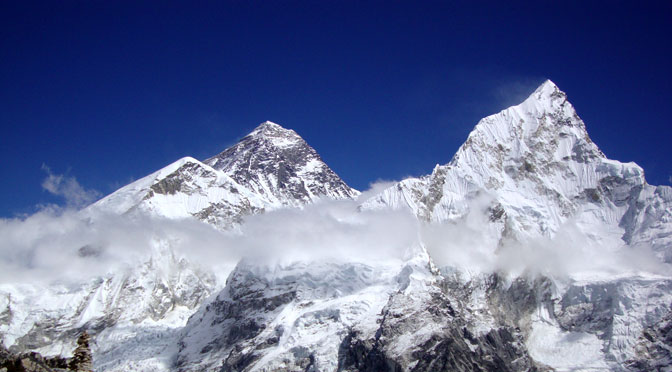
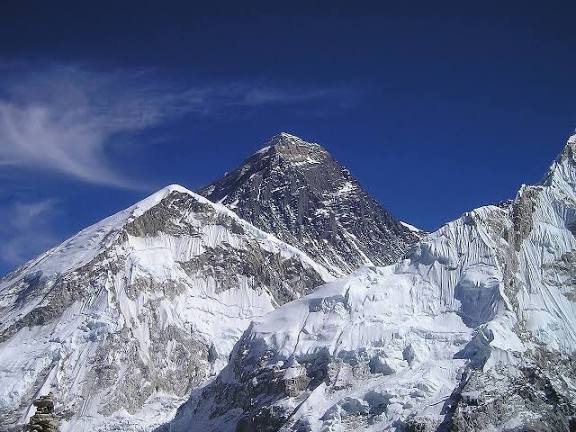
Everest Base Camp Trek Firstly, your arrival in Kathmandu marks the start of the Everest Base Camp Trek. Here, you will spend an extra day for trek preparations and you may also choose to explore the city and its world heritage sites that reflect the ancient history, art, and culture. The day after, you will get on a flight to Lukla, one of the most dangerous airports in the world. Following the Dudh Koshi River, you will trek north to Phakding. Entering the Sagarmatha National Park, you will trek to Namche Bazaar. As you hug the banks of the Imja River, you will head towards Tengboche and further continue to Dingboche. You will spend another buffer for acclamation day after the Namache bazaar and explore the village area. Further, you trek north to the Thukla village. You will trek along the Khumbu Glacier to cross Lobuche and reach Gorak Shep. Then, another short trek across rugged and dry trails takes you to the base camp of Mt. Everest (8848m). En route, you can relish the views of Mt. Everest along with Nuptse (7861m) and Pumo-Ri (7165m). After exploring the base camp, you return to Gorak Shep and prepare for a hike to Kala Patthar. You can enjoy a panorama of the Everest Himalayas from this vantage point. Finally, you begin the return trek and retrace your steps to Lukla. Everest Base Camp Trek explores the magical lands of the Khumbu Valley and the Himalayas on the EBC Trek. The trip takes travelers across the trails at the foothills of some of the highest mountains in the world. Also, Everest trek offers a close introduction to the cultural of the Leaders ethnic group in Everest Regions. Similarly, the trek also offers views of mountains like Cho Oyu (8201m), Lhotse (8516m), Nuptse (7861m), and Ama Dablam (6,812 m/22,349 ft) All in all, the trek ensures a blend of natural and cultural marvels of the Everest region. At Heaven Nepal Adventure, we make sure that our clients get the finest services. Also, we have experienced guides and porters to assist you on the trek. Similarly, we have numerous other treks across the country. Flight Delays: Due to the geographical diversity and unpredictable climate in the Himalayas, internal flights are often delayed or cancelled. Weather conditions like heavy rainfall, storms, or fog can disrupt flights. So, it is wise to spare an extra day or two as buffer days, in case of flight delays and cancellations. Likewise, it is also necessary to note that the weather conditions are great during the spring (March to May) and autumn (September to November) seasons. If you have enough time, you can also choose road transportation in such cases. Note: Due to the Air Traffic at Tribhuvan International Airport, all flights to and from Lukla will now be operated from Ramechhap Airport, which is a 4-hour drive from Kathmandu. The transportation to and from Ramechhap will be provided by the company. Thus, keeping a few extra days after a trek is good in case of flight delay or cancellation.
What's included
✓ Trekking permits
✓ Accommodation
✓ Breakfast & dinner
✓ Porter
✓ First aid kit
✓ Map & route guide
✓ All meals
✓ Drinking water
✓ Down jacket
✓ Sleeping bag
✓ Airport transfers
✓ Licensed guide
✓ Arrival airport pick-up and transfer to the hotel. Welcome dinner program in typical Nepalese restaurant and Farewell dinner with official Staff 3 Nights at 3-star standard accommodation in Kathmandu with breakfast. Guided city tour in Kathmandu valley. ( UNESCO world heritage site 4 Places) Kathmandu – Lukla – Kathmandu on the domestic flight. Accommodations provide on the mountain tea house/lodge and 4 nights provide an attached bathroom with hot shower. All meals (Breakfast
✓ and Dinner
✓ Tea/Coffee) during the trek (Alcoholic beverages are excluded) and fresh fruit after the dinner during the trek Purified drinking water while on a trek One porter for every two members in a group and all his expenses. Government registered Trekking Guide well an English fluent Speaking during the trek. Sagarmatha National Park permit fees and All Government paper work and Local body taxes as applicable. Down Jackets
✓ Sleeping bags and you must be return the after your completion the trek. Souvenir: Heaven Nepal Adventure T-short
✓ Duffel Bag and Trekking route Maps Group Medical Kit Box (Diamox and other first-aid medicine carried by a guide). Adventure certificate ( after completion of the trek) Final departure to the airport.
Not included
✕ Travel insurance
✕ Personal gear
✕ Flights
✕ Tips
✕ Drinks & snacks
✕ Visa fees
✕ Lunch
✕ Emergency evacuation
✕ Extra accommodation
✕ Laundry
✕ Lunch
✕ International Airfare. Nepal Visa. Sightseeing permit fees in Kathmandu. Lunch and dinner in Kathmandu except for welcome/farewell dinner. Deserts (cakes
✕ bakes
✕ and pies)
✕ additional hot drinks
✕ bottled drinks
✕ boiled and mineral water during the trek. Electronic device Charging
✕ Hot showers and Wi-Fi. Tipping to driver and trekking crew. Anything not mentioned in ‘Service included’ section.
🌿 Cultural Note
Meals and Accommodations Teahouses along the route provide basic lodging and meals. Typical food includes rice, noodles, soups, and traditional Nepali dishes like dal bhat. Facilities become more basic at higher altitudes. Nepal Country Visa and Entry Procedure Here are two ways to obtain a Nepalese visa. The first one is via the Nepalese Diplomatic Missions stationed in your country. As the second way, you can easily obtain an On-Arrival visa at the entry/exit points stationed across the country. You can fill out an application form and provide the necessary documents to receive an On-Arrival Visa. Travellers can choose different visa types according to the length of their stay in Nepal. The visa for 15 days costs USD 30, USD 50 for 30 days, and USD 125 for 90 days. Also if your visa is about to expire but you are not yet done exploring the country, you can get your visa extended for USD 3 per day and if your visa has already expired, it costs USD 5 per day. This information regarding updated Visa Fees is available at the official website of the Department of Immigration at http://www.nepalimmigration.gov.np/post/notice-regarding-visa-fee-updates. You can also head to the following link for more information regarding Tourist visas in Nepal. http://www.nepalimmigration.gov.np/page/tourist-visa How to reach Nepal? International flights are only available through the only International Airport i.e. the Tribhuvan International Airport. If you are planning on travelling to Nepal by air then TIA is your only option. Flights can be boarded from India, Dubai, Hong Kong, Bangkok, and Kuala Lumpur among many other destinations. Travelling by land you have two options, via India and China. There is also a direct railway line connecting India and Nepal along with several bus facilities for travelling across the border from India. Travelling by road through India is the most easily accessible. You can travel to Nepal through Sunauli- Bhairahawa, Raxaul – Birgunj, Siliguri- Kakarbhitta, Banbasa – Mahendranagar, or Bahraich- Nepalgunj. Kodari and Kerung are two entry/exit points stationed at the Nepal-Tibet border. Popular Destinations to Visit There are numerous travel destinations in Nepal; each with a unique identity and story of its own. Kathmandu is one such destination, with dozens of sightseeing to do, eateries to try out, and handicrafts to shop. Next up is Pokhara which enchants its visitors with its serene lakes and the enthralling views of the Dhaulagiri, Annapurna, and Fishtail ranges. Similarly, Lumbini, Chitwan, Bandipur, and Palpa are a few other destinations which are ripe for tours and leisurely vacations. Chitwan National Park and Bardia National Park are two of the most popular destinations for jungle safari and wildlife exploration. As for adventure sports, Kathmandu and Pokhara offer plenty of choices including rafting, bungee jumping, zip-lining, and paragliding. Likewise, the Everest, Annapurna, and Langtang regions stand out as prominent destinations for treks, peak climbing trips, and expeditions. Things to do in Nepal The nation is considered to be a paradise for trekkers and grants an exciting number of choices. On these treks, you will witness the grand views of the Himalayas and the cultural prosperity of the ethnic communities along the trails. Everest Base Camp Trek and Annapurna Base Camp Trek are two of the most popular treks in Nepal. For those who are not satisfied with just gazing up at the mountains, you can go for a mountaineering expedition and peak climbing. While expeditions take you to mountains above the height of 6,500 meters, the destinations of peak climbing trips are low-lying peaks which can be summited even by amateurs. Everest (8848m), Annapurna (8091m), and Ama Dablam (6856m) are popular expedition sites whereas Island Peak (6189m), Mera Peak (6476m), and Pisang Peak (6091m) are the notable peak climbing destinations. Short tours and sightseeing in Nepal are also quite popular among travellers in Nepal. Likewise, adventure sports like rafting, bungee jumping, paragliding, canyoning, rock climbing, zip-lining, and mountain biking are also among the things that can be done in Nepal. Trekking Seasons in Nepal The country lies in the temperate zone and has four distinct climates: spring, summer (with monsoon), autumn, and winter. Normally, the best time to trek in Nepal is in March-May (spring) when the skies are clear, trails are filled with blooming flora, and the temperature is just right. Another appropriate season is mid-September to November (autumn), during which the temperature is moderate, the skies are clear, and mountain views are stunning. The summer season (June – August) is occupied by heavy rainfall increasing the chances of landslides in the hills, while the winter season brings in harsh weather conditions and extreme cold. However, there are treks which can be done during winter and monsoon as well. Upper Dolpo and Upper Mustang regions lie in the rain-shadow area so, they are ideal trek destinations during monsoon. Likewise, easy and low-altitude treks like Ghorepani Poonhill and Tamang Heritage Trek are perfect during the winter season. Read our blog on the Best Season to Trek in Nepal for more info. Altitude Sickness While trekking in Nepal is extremely satisfying, altitude sickness might get a better hold of you at times. The air pressure and oxygen concentration decrease the higher you travel. As such, altitude sickness is an illness that the human body suffers from due to these reasons. The symptoms of the sickness include lack of appetite, nausea, weakness, lightheartedness, sleep disturbance, tiredness, and headache. These symptoms generally appear when moving upwards of the height of 2,400 meters from sea level. You can adopt different measures to avoid altitude sickness like a walk at a slow and steady pace, avoiding smoking, and stopping at different stations to acclimatize. Before beginning your trek, make sure you have a first aid kit with ibuprofen or paracetamol and Diamox. If anyone falls victim to altitude sickness, it is necessary to inform the trip leader and descend to a lower altitude. In extreme cases, it might also be necessary to perform Heli rescue and emergency evacuations. Travel Insurance Accidents can happen anywhere so, it is recommended that all tourists get travel insurance before visiting Nepal. Depending upon the insurance policy and the company, the insurance will look after tragic like theft, loss or accidental damage of gears and other belongings, baggage, and medical emergencies. Likewise, the insurance should also include helicopter evacuation and any kinds of mishaps that might occur during adventure sports like bungee jumping, rafting, and zip-lining. No one is capable of foreseeing accidents, but each individual can buy an insurance policy to lessen the effects of the accident. Banking, ATMs, and Money in Nepal Nepalese Rupees is the official currency of Nepal. The banknotes of 1, 2, 5, 10, 20, 50, 100, 500, and 1000 whereas coins of 1 and 2 are available in Nepal. While travelling to Nepal, banking and money exchange are not a huge deal in big cities like Pokhara and Kathmandu. When you head to rural areas, the availability of banks, ATMs, and money exchange booths becomes fairly scarce. So, it is best to withdraw enough cash and exchange the currency in major cities. You can also exchange foreign currencies for Nepali Rupees at the Tribhuvan International Airport. You need to be updated about the exchange rates which are available at the official website of Neal Rastra Bank at https://www.nrb.org.np/fxmexchangerate.php. Internet and Communication It is quite easy to access the Internet in Nepal. Using Wi-Fi is a widely used way to communicate and use the Internet. Wi-Fi is easily available in major cities and even in some remote destinations. When trekking to remote locations, Wi-Fi might not always be available; so, using cellular data is the best way to communicate over the Internet. You can buy a Sim-card in Nepal at a reasonable price which allows you to make an international call. Also, you can use mobile data while you are in areas without Wi-Fi. Telephone, Fax, and newspapers are a few other forms of communication in Nepal. Health and Safety Including Traveling Alone in Country The country is very safe for all tourists and travelers. The country is not experiencing any armed conflicts, religious wars, or grave crimes. Travelling alone is also perfectly sage and you will find willing Nepalese to help you with your travel issues. We also advise solo travelers to inform their loved ones and authorities like local police about their travel destination and itinerary to remain on the safe side. However, there are many issues that you need to consider to trek alone. So, you should have ample knowledge and ideas before going on a solo trek. Likewise, there is a Tourist Police department in Nepal which looks after the welfare and safety of the travellers. You can learn more about them at the official website of the Nepal Tourism Board at https://www.welcomenepal.com/plan-your-trip/tourist-police.html. In case of medical emergencies during your trek, you can visit the nearest health post which provides basic medical services. If the medical complication persists, you’ll have to head to the hospitals in towns and cities. Similarly, it is also necessary to follow a healthy and hygienic lifestyle when travelling in Nepal to stay fit and healthy.
Cancellation Policy — Moderate
Cancellation time is measured from your trip start date.
Reviews
No reviews yet — be the first to leave one after your trip.
Useful information