We use cookies to understand how people use Nepal Untrodden and to improve the site. See our Privacy Policy for details. No data is sold.
Duration
13 days
Max Altitude
4.1 km
Difficulty
Moderate
Best months to visit
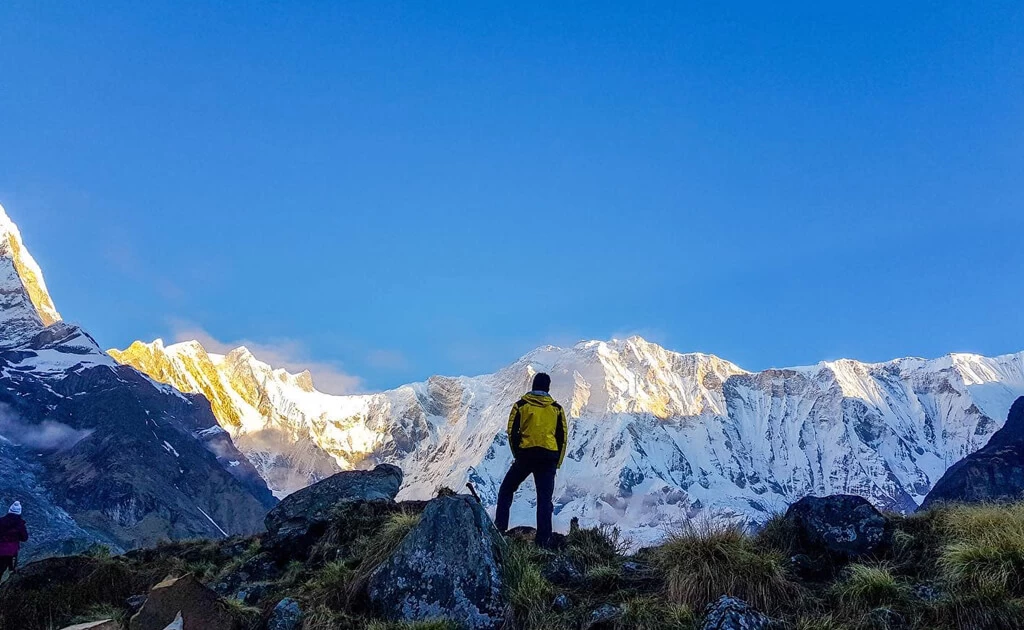
The Annapurna Base Camp Trek is one of Nepal's most celebrated trekking routes, drawing thousands of adventurers from around the world each year. This 13-day journey winds through the heart of the Great Annapurna Himalayas, offering trekkers an extraordinary close-up encounter with some of the world's most dramatic mountain scenery. The route passes through a remarkable diversity of landscapes, from lush terraced fields and dense rhododendron forests to narrow glacial gorges and the iconic Annapurna Sanctuary — a vast natural amphitheater formed by a circle of towering peaks roughly 10 miles in diameter. Trekkers will be rewarded with sweeping views of Annapurna South, Hiunchuli, Annapurna I (the world's tenth highest mountain at 8,091 meters), Fang, Annapurna III, Gangapurna, and the iconic fishtail peak of Machhapuchhare. The route follows the Modi Khola river valley as it carves its way southward through a gorge nearly 12,000 feet deep before opening into the fertile domain of the Gurung people — one of Nepal's most distinctive hill communities. A highlight of the trek is the sunrise hike to Poon Hill viewpoint, which delivers breathtaking panoramic views of Dhaulagiri, Nilgiri, Annapurna, and Machhapuchhare bathed in the golden light of dawn. Along the trail, trekkers pass through quaint Gurung villages, observe traditional rural life, and experience genuine Nepali hospitality in teahouse lodges. The trail also traverses rich biodiversity zones, offering glimpses of varied flora and fauna unique to the Annapurna Conservation Area. The trek culminates at Annapurna Base Camp at 4,130 meters (13,550 feet), set within the legendary Annapurna Sanctuary — a deeply rewarding destination that places trekkers at the very foot of some of the Himalayas' most iconic peaks. Spring (March–May) and autumn (September–November) are the optimal seasons, offering stable weather, clear skies, and spectacular mountain visibility.
What's included
✓ Airport pickup and drop-off by private car/van/bus
✓ 3-star accommodation in Kathmandu with free breakfast (arrival and post-trek nights)
✓ Deluxe hotel accommodation in Pokhara with breakfast
✓ All standard meals (breakfast, lunch, and dinner) during trekking
✓ All necessary permits and conservation entry fees
✓ TIMS (Trekkers' Information Management System) permit
✓ Ground transportation from Kathmandu to Pokhara and return by tourist bus
✓ Private taxi from Pokhara to trek starting point and from trek ending point to Pokhara
✓ All lodge/tea house accommodations during the trek
✓ Experienced and licensed trekking guide
✓ Porter service (1 porter per 2 trekkers)
✓ Salary, food, drinks, accommodation, transport, and insurance for guide and porter
✓ Two nights standard accommodation in Pokhara
✓ Emergency helicopter rescue arrangement (covered by trekker's travel insurance)
✓ Medical supplies and first aid kit
✓ Farewell dinner at a typical Nepali restaurant with cultural dance show
✓ All government taxes, VAT, and service charges
✓ Licensed guide
✓ Trekking permits
✓ Accommodation
✓ Breakfast & dinner
✓ Porter
✓ First aid kit
✓ Airport transfers
✓ Sleeping bag
✓ Down jacket
Not included
✕ Nepal entry visa fee
✕ Travel insurance
✕ Meals while in Kathmandu and Pokhara (outside of included breakfasts)
✕ All alcoholic and non-alcoholic beverages
✕ Chocolates and sweet items
✕ Tips for guide and porter
✕ WiFi, hot showers, laundry, and other personal services on the trail
✕ Optional helicopter return from base camp to Pokhara (approx. $500 extra)
🌿 Cultural Note
The Annapurna region is home to the Gurung people, one of Nepal's most prominent hill communities known for their warm hospitality and rich cultural traditions. Trekkers are encouraged to dress modestly, remove shoes before entering homes and religious sites, and walk clockwise around mani walls and stupas. It is customary to greet locals with 'Namaste' and to ask permission before photographing people. The teahouse culture along the route provides an authentic window into rural Nepali life — supporting local businesses by purchasing meals and accommodation at teahouses contributes directly to the local economy.
Cancellation Policy — Moderate
Cancellation time is measured from your trip start date.
Reviews
No reviews yet — be the first to leave one after your trip.
Useful information